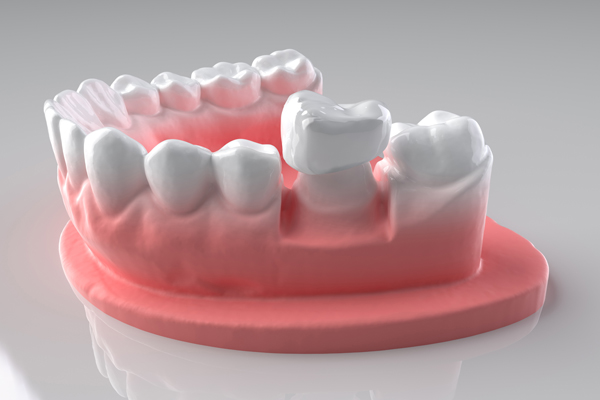
A dental crown restoration involves two dental visits. Dentists use this type of restoration to repair a range of tooth damage types, including decay, chips, cracks, and teeth worn down by continuous grinding. This guide discusses what you can expect during a dental crown restoration and how a dentist can help ensure a safe and efficient process.
What is a dental crown restoration?
A dental crown restoration is a dental restoration that covers the entire tooth. This is necessary when the damage is relatively severe, and the long-term health and appearance of the tooth are at risk. There are different types of dental crown restoration. Notably, the material includes:
- Ceramic (tooth-colored)
- Porcelain-fused-to-metal
- Metal alloy
- Gold
Each option offers unique pros and cons. As discussed below, there are also same-day dental crowns. These are ceramic crowns that are created on the patient’s first visit with the use of 3-D technology.
What to expect throughout the dental crown restoration process
The steps involved with a dental crown restoration include reshaping the tooth, taking a dental impression, placing a dental crown, and scheduling a second visit when the permanent crown is ready. Same-day dental crowns may also be an option in certain situations.
The first visit: Tooth reshaping, dental impression, and a temporary crown
The first visit (the consultation) involves reshaping the tooth and taking a dental impression, which is used to customize the permanent crown. Before this occurs, the dentist can answer any questions the patient has and explain the process of any alternative procedures that may also be options. The patient may feel slight discomfort during the tooth reshaping, but the first visit is non-invasive. After reshaping the tooth to ensure an optimal fit for the permanent crown, a temporary crown is placed.
The second visit: The placement of the permanent crown
It can take several weeks for the permanent crown to be created in the lab and sent back to the dentist’s office. In the meantime, the patient should take care of their temporary crown and the rest of their teeth the best they can. Once the permanent crown is ready, the patient returns for a second visit to have the permanent crown placed. This process is non-invasive as well. In addition, the dentist may provide aftercare instructions to help the patient adjust to life with their restoration.
Aftercare and follow-up visits for a dental crown restoration
There is not much (if any) discomfort after the placement of the permanent crown, so patients do not have to change their normal routine. Of course, it is still important to make good oral hygiene choices, limit sugar consumption, and brush and floss regularly. The dentist may request a follow-up visit to ensure no complications arise with the crown or changes to the patient’s oral health.
When same-day dental crowns may be an option
Some dentists offer same-day dental crowns (also called CEREC crowns). These ceramic crowns are ideal for more visible teeth rather than teeth used more for chewing. The process for CEREC crowns is similar, except that the crowns are made on the same day in the office with advanced 3D digital technology.
Frequently asked questions about a dental crown restoration
It is common for patients to have questions about any dental procedure. Below are the two most commonly asked questions that dentists often receive about dental crown restoration.
How can I choose the right type of dental crown restoration?
The right type of dental crown restoration depends on several factors. Most notably, the location of the tooth matters. For example, a molar may require a stronger material such as metal or porcelain-fused-to-metal, whereas it may be better to use a ceramic crown for a more visible tooth.
Is the dental crown restoration process painful?
The dental crown restoration process is minimally invasive and does not cause much if any, discomfort. The dentist may recommend a mild sedative to help ensure a pain-free experience. There may be a slight adjustment period with minimal discomfort after the procedure. Still, most patients are able to make a full recovery within a day or two after the placement of the dental crown restoration.
Consult with our dental practice today to learn more
Do you have one or more damaged teeth that may need a dental crown restoration? If so, then contact our dental practice today to schedule a time for a first visit. We understand how inconvenient and discomforting a damaged tooth can be, and we seek to restore our patients' smiles in the most convenient way possible.
Request an appointment here: https://gkdentaloffice.com or call GK Dental PC at (617) 826-6075 for an appointment in our Everett office.
Check out what others are saying about our dental services on Yelp: Dental Crowns and Dental Bridges in Everett, MA.
Recent Posts
When dentists recommend dental crowns, they are referring to caps that they place atop damaged teeth. Crowns restore the shape of a patient's tooth, covering the tooth and protecting it from further damage when fillings are insufficient. Dentists shape crowns from porcelain, resin, metal, or ceramic.Every day, dentists use dental crowns to restore smiles. When…
When a person is missing one or more teeth but does not need a full set of dentures, dental bridges may be recommended to take the place of the lost teeth. The number of teeth that a dental bridge replaces may depend on several factors.Dental bridges consist of two or more crowns that attach to…
For patients in need of dental crowns, there are plenty of options available. Two of the most common choices are porcelain crowns and metal crowns (often with a porcelain overlay fused to the metal). Depending on a patient's specific circumstances, one of these crown types may be the preferred option.Metal crowns have the advantage of…
A dental crown is an oral prosthetic used to protect a tooth or restore its appearance. Also called a cap, it fully encloses the part of the tooth visible above the gums. It protects the tooth from saliva, bacteria and debris in the mouth.Dental crowns are one of the most common oral prosthetics, and their…