How Dental Implants are Placed in the Jawbone
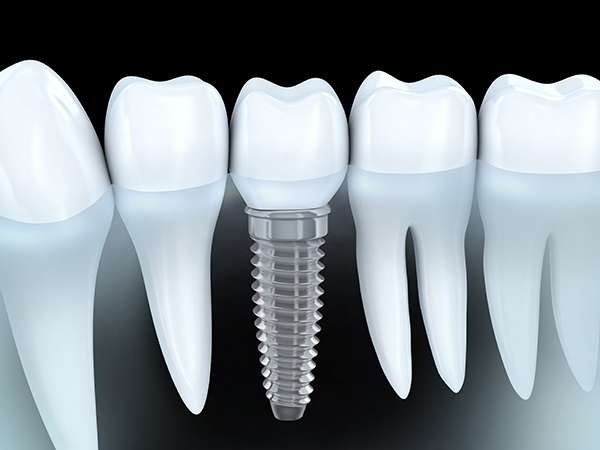 Most people know dental implants are tiny prosthetics that are used to create a new fake tooth. Few people, outside of patients who have received one, are aware of just how great a dental implant can be. For starters, dental implants are based on a simple grounding philosophy. Since the root of the tooth is the grounding for the tooth, the dental implants we use provide the same level of strength and security to the new dental crown that we place over them. Additionally, the root has a very important and symbiotic relationship with your jawbone, which works to help in stabilizing the tooth itself. Our tiny titanium implants mimic this relationship perfectly. What this does for you is it creates a circumstance where your new fake tooth is strongly grounded in an implant that is literally a perfect non-biological imitation of your root. As such you can eat anything that you would normally eat, without fear of causing unnecessary damage to your new implant or crown. This also means that you do not have to engage in special cleaning activities. Simply brush your teeth, and floss, like you would normally do and the new tooth will also get clean.
Did you know that dental implants come in two different types? Most people, even those who have dental implants, are usually not aware of this fact. There are two types of dental implants because in order for a traditional dental implant to be successful there is a prerequisite for the jawbone to be healthy. The jawbone and the dental implant have a symbiotic relationship, which means the jawbone has to have sufficient density, or bone mass, to sustain and support the implant. We will typically find this out during our initial consultations and examinations, where we will take x-rays. If your jawbone can sustain an implant, we will use the traditional implant. Also known as an Endosteal implant, this implant is a cylindrical shaped device, often a screw, made of titanium. It is inserted directly into the jawbone for maximum stability and to ensure the relationship between the two.
For other patients, however, they may not have the jaw bone density that is required to place an Endosteal implant. In cases like this the patient, you, have one of the two choices. You can have reconstructive surgery on the jaw to make it stronger and able to withstand and support the implant. The other option, for those that do not want to or cannot undergo reconstructive surgery, is to use an implant known as a Subperiosteal implant. A Subperiosteal implant functions much the same way as an Endosteal implant, with one notable exception. A Subperiosteal implant is placed into the gum but not into the jawbone. It is placed on top of, or slightly above the jawbone itself. This provides the security and stability that the dental crown needs, without putting added pressure on the already weakened jawbone. The initial examination will tell us what kind of implant you need, and we can make sure you have all the information you need to make a decision.
Related Posts
Missing teeth can be a nuisance, whether their absence interferes with speech or makes it hard to eat the foods that you love, but thankfully, a dental implant can be a highly effective method of restoring your smile and bite after losing one or more teeth. While it is true that dental implants are not…
Dental implants can replace missing teeth, restore chewing strength, and provide support for a natural-looking smile. For optimal results, an endodontist or root canal specialist can carefully plan and place implants. After all, successful treatment outcomes begin with clear education about what to expect at every step, as well as proper care and maintenance afterward.…
Dental implants are an effective and modern way to go about replacing missing teeth. If you are missing a tooth, you are not alone in your predicament; most people lose one or more of their permanent teeth over the course of their lives. People lose teeth due to trauma to the face, aging, or oral…
Dental implants are a popular option for people missing one or more teeth. They look, feel, and function like natural teeth, making them an enticing choice for adults needing tooth replacement. Though this option offers many benefits that other teeth replacement options do not, it may not be the right choice for everyone. Let us…